This student-facing performance task guide describes the distinguishing characteristics of argumentative texts, provides examples and exemplars to analyze, and offers a step-by-step process that students can use to write their own argument.
Competency Area: ELA
-

Student Guide: Argumentative Writing
The tools in this guide will help you earn ratings for all the skills in the competency ELA.3 Writing Arguments. Read through the skills and indicators on the continuum for ELA.3 Writing Arguments so you understand how teachers will rate your writing.
-

Student Guide: Conducting Research (Google Site)
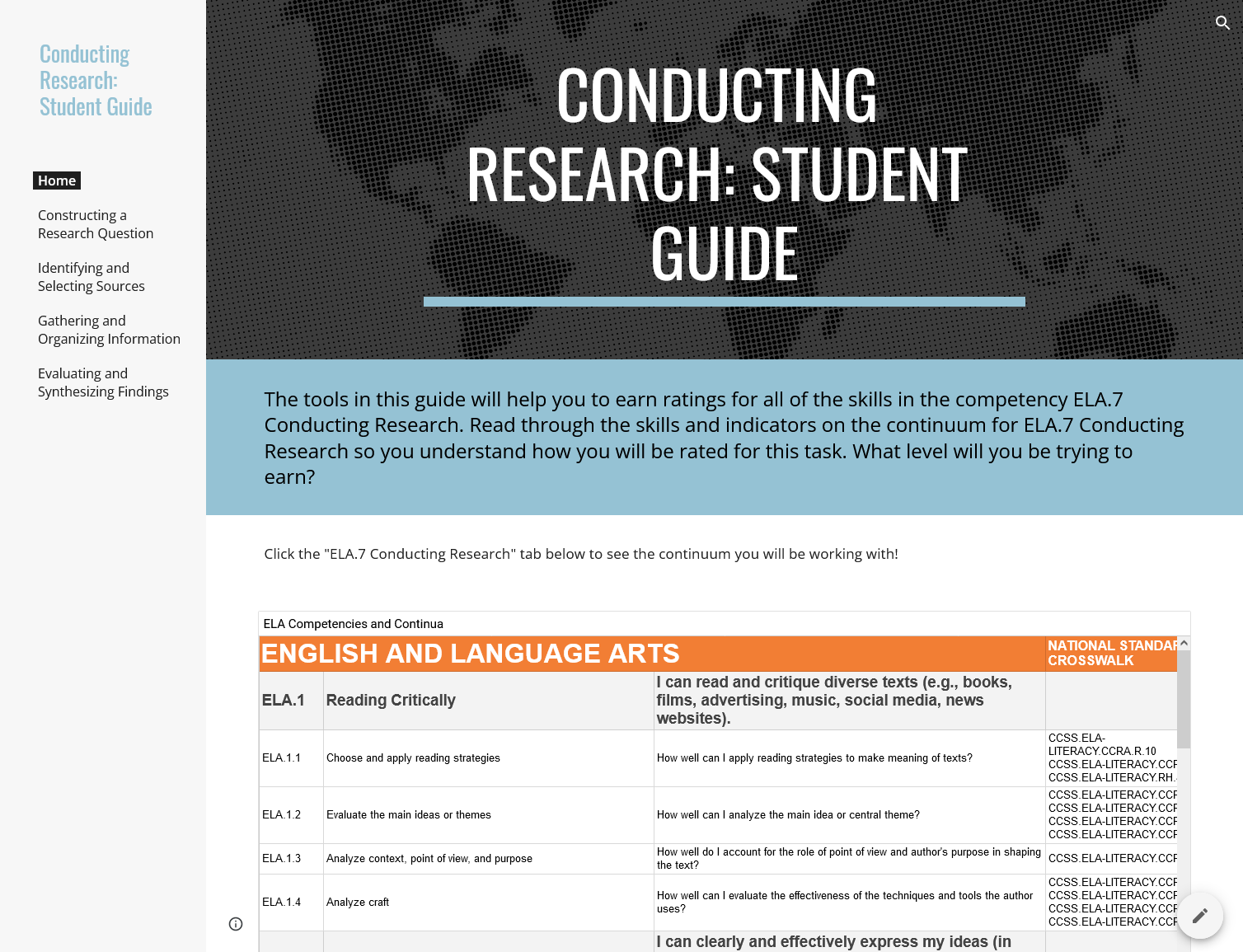
The tools in this guide will help you earn ratings for all the skills in the competency ELA.7 Conducting Research. Read through the skills and indicators on the continuum for ELA.7 Conducting Research so you understand how your teachers will rate your performance.
-

Learning Activity Template: Photo Drop
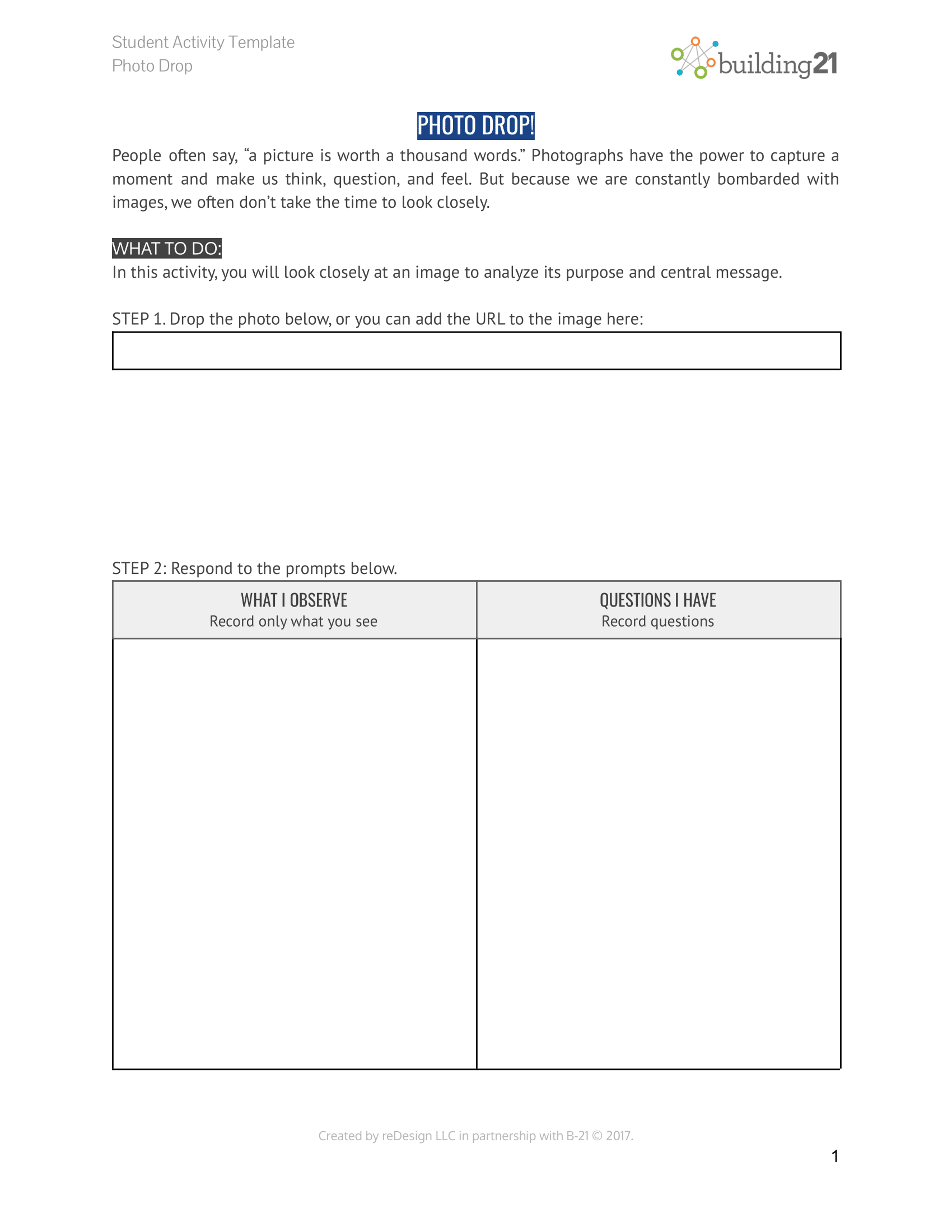
People often say, “a picture is worth a thousand words.” Photographs have the power to capture a moment and make us think, question, and feel. But because images constantly bombard us, we rarely take the time to look closely.
-

Learning Activity Template: Question the Text
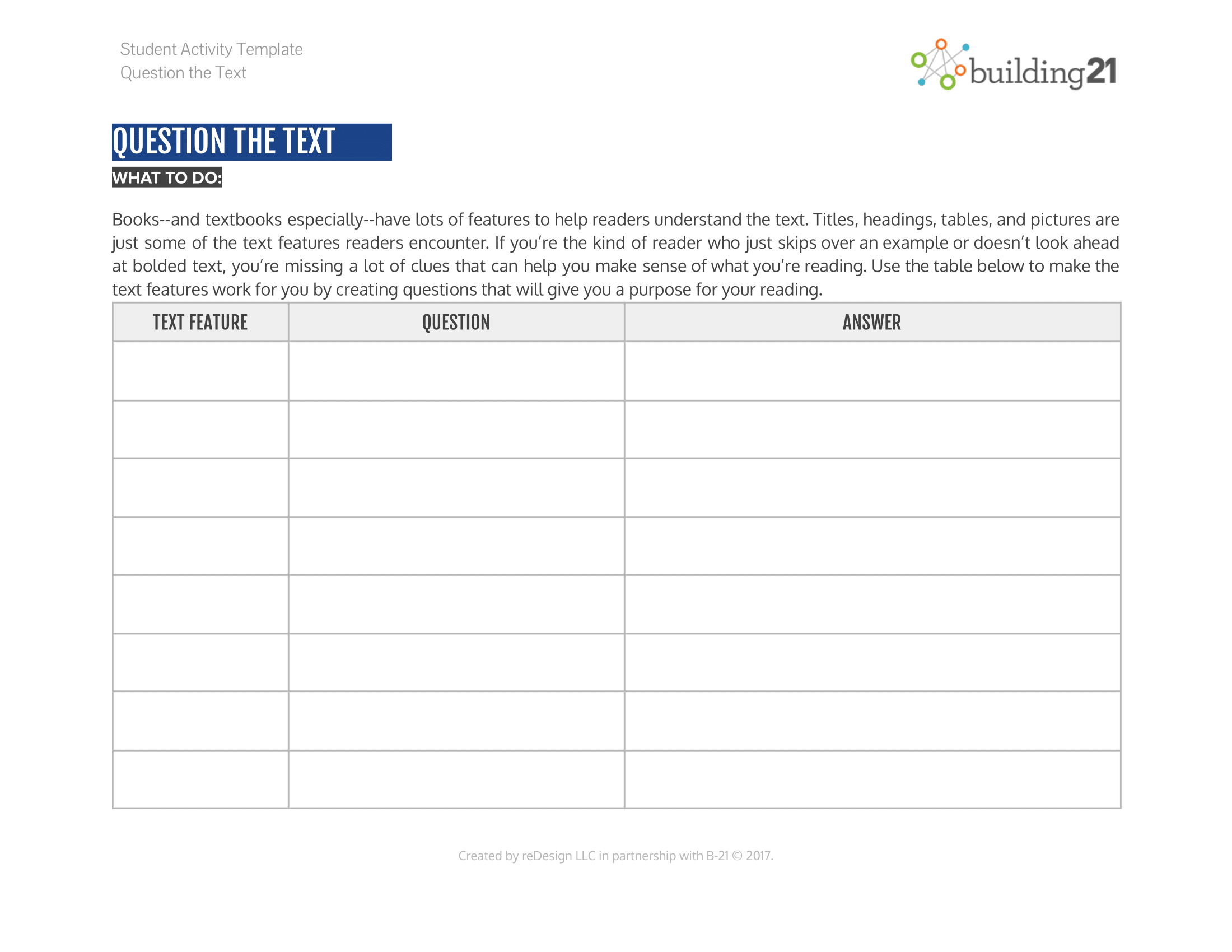
Books—and textbooks especially—have lots of features to help readers understand the text. Titles, headings, tables, and pictures are just some of the text features readers encounter. If you’re a reader who skips over an example or doesn’t look ahead at bolded text, you’re missing a lot of clues that can help you make sense of what you’re reading. Use the table below to make the text features work for you by creating questions that will give you a purpose for your reading.
-
Learning Activity Template: Text Annotation
It is often helpful to “code” the text as you read to enhance close reading. This will help you remember important pieces of information from the text.
-
Learning Activity Template: THIEVES Template
Books—and textbooks especially—have lots of features to help readers understand the text. If you’re a reader who skips over an example or doesn’t look ahead at bolded text, you’re missing a lot of clues that can help you make sense of what you’re reading. Use the THIEVES table below to focus on the text features and make them work for you.
-
Learning Activity Guide: Preview a Text
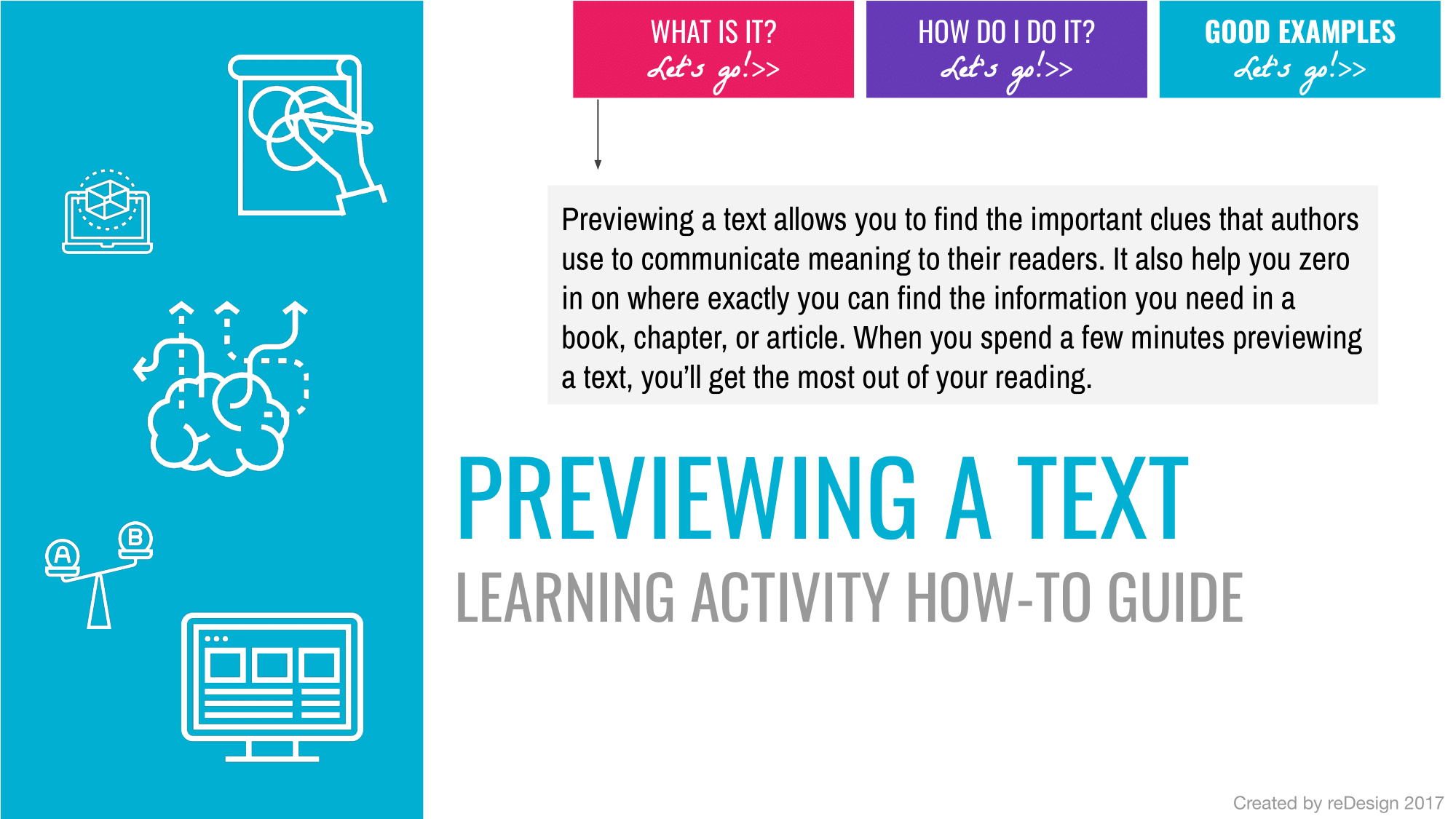
Previewing a text allows you to find the important clues that authors use to communicate meaning to their readers. It also help you zero in on where exactly you can find the information you need in a book, chapter, or article. When you spend a few minutes previewing a text, you’ll get the most out of your reading.
-
Learning Activity Guide: Summarization
Summarizing is an important skill for analyzing information and recording it for later review. When you summarize, you actively process information as you read, listen, or watch. You make meaning of it as you distinguish between main ideas and details, and as you restate the source in your own words.
-
Learning Activity Template: Cornell Notes
Note taking is an important skill for recording information—and your response to that information—for later review. When you take notes, you actively process information as you read, listen, or watch. You make meaning as you ask questions, jot down reactions, and summarize.