Register

Category: Strong Instructional Practices

  • Teaching Black Joy

    Teaching Black Joy

    [vc_row type=”in_container” full_screen_row_position=”middle” column_margin=”default” column_direction=”default” column_direction_tablet=”default” column_direction_phone=”default” scene_position=”center” text_color=”dark” text_align=”left” row_border_radius=”none” row_border_radius_applies=”bg” overflow=”visible” overlay_strength=”0.3″ gradient_direction=”left_to_right” shape_divider_position=”bottom” bg_image_animation=”none”][vc_column column_padding=”no-extra-padding” column_padding_tablet=”inherit” column_padding_phone=”inherit” column_padding_position=”all” column_element_spacing=”default” background_color_opacity=”1″ background_hover_color_opacity=”1″ column_shadow=”none” column_border_radius=”none” column_link_target=”_self” column_position=”default” gradient_direction=”left_to_right” overlay_strength=”0.3″ width=”1/1″ tablet_width_inherit=”default” tablet_text_alignment=”default” phone_text_alignment=”default” animation_type=”default” bg_image_animation=”none” border_type=”simple” column_border_width=”none” column_border_style=”solid”][vc_column_text]Two years ago, as a Year 2 ELA teacher at Building 21 Philadelphia, I joined forces with our school’s African American history teacher, Jared McElroy, to teach a year-long interdisciplinary studio called “Building an Anti-Racist Society,” with the novel Stamped as our anchor text for our Year 2 students at Building 21 Philadelphia. Throughout this studio, where we specifically focused on the historical as well as personal implications of “The Danger of a Single Story,” students examined not only the single story or myth created about Africans to justify slavery and oppression but also how single stories can be told of us as individuals. Here, students analyzed how these myths have historic and national impact, as well as impact upon our personal and social identities. In a culminating task aligned to both our Social Studies and ELA competencies, students read about and researched various African civilizations to counter the myths about Africans and to show the enduring accomplishments of Africans. The ELA culminating task was for students to write a personal reflection examining a single story or myth that they have encountered related to their social identity, to research someone who has struggled with the same myth, and finally to examine how they have dealt with it or overcome this challenge, while also analyzing the impact of an individual’s action (SS 1.4).

    However, while we taught this studio before, in teaching the origin, spread, and embedding of these racist myths, we as teachers, and as white teachers, understand and have an apprehension about the pain that teaching about such ingrained trauma can bring to our mostly black students. Several years ago, I was teaching a smaller studio centered around themes related to the justice system, where students researched various aspects of our criminal justice system, including topics such as mass incarceration and private prisons. I will never forget a 10th grade young woman with whom I had a strong relationship, and her visible trauma from learning the history of unjust incarceration of African Americans. Her strong and painful reaction to the material caused me to reflect on how we were engaging students in this content and other content related to the course.

    Shortly after that teaching experience, I sought guidance from our school’s Behavioral Health staff and Restorative Practices expert, David Sparrow, in how I might address such charged and painful topics going forward. He left me with advice that I will never forget; he told me that when we explore and learn about events that involve trauma, especially racial trauma, it is almost like opening up a patient for surgery. And just as the moments of instruction and teaching are important, so are the moments of closure, for that is when healing can begin. And just as the wounds are opened up, the wounds must be closed again. This can occur in any number of ways, both inside and outside of the classroom, in opportunities for reflection provided by the teacher, which might include journaling, reflection, or proactive circles, to name a few. But still, I was left with an ongoing internal conflict about the content of the curriculum and how overwhelmingly heavy it was to teach and to bring to students.

    While the metaphor of the opening wound might seem violent and dramatic, it is not an exaggeration to say that what we teach emotionally or mentally impacts our students in such a manner, and therefore must be treated with such weight. This weight, along with the unfinished conflict about how to teach the complete narrative of African American history, led us to many discussions, reflection, and research as we considered the studio for a second year. The dilemma we faced is laid out in “Black History Month: Teaching the Complete History” by Teaching Justice, and cites research by Stephanie P. Jones, founder of Mapping Racial Trauma in Schools, where frequently “the transatlantic slave trade and its resulting horror within the American slavery system are essentialized as all Black history itself.”[/vc_column_text][vc_column_text]Additionally, Jones “found that the hard histories of slavery, the civil rights movement and other traumatic events in Black history are frequently mistaught or introduced with little context.” But how can we solve for this challenge? It is certainly not to ignore, whitewash, or sugarcoat the painful reality of American history. Any alternative short of the complete Black history is much like Adichie’s warning, where “the problem with stereotypes is not that they are untrue, but that they are incomplete. They make one story become the only story.” Therefore, our challenge was to tell the complete story, which is a story, as the article suggests, of providing students the opportunity to learn about humanizing experiences. Enter Black Joy.[/vc_column_text][vc_column_text]Again, as white teachers, we understand that we have never experienced Black Joy. This is obvious to our students, and we put that on the table for discussion with them as well. And yet, in our combined classes, we introduced and discussed what this might look like for our students, starting with the nature of what the human experience of joy is, and how it can be experienced despite suffering and inhumane circumstances. Where Mr. McElroy and I always tried to balance the pain in the content and authenticity of the experience with the accomplishments of African Americans, we found that Black Joy as an infusion to the studio is something the students always return to. As part of the studio frame, students now return to the questions: Where has Black Joy occurred throughout the course of American history alongside the trauma and suffering? Where did Black Joy express itself as early as the ancient African civilizations we studied and that students were able to identify and use as counter-claims to the early American racist myths? Where does Black Joy occur today and personally for our students, and how is it a form of resistance? How does Black Joy show up in building an anti-racist society?

    Our essential questions have expanded to become more complete, to fully express and answer complex questions that examine a more complete narrative rather than only the oppressive one. The temptation might be to sugarcoat a history with pivotal celebratory or temporal moments like Reconstruction. But an abiding commitment to return to Black Joy really moves our examination of a society that involves enlightenment and empowerment, enduring states powered by short bursts or shorter moments of joy. A study of Ida B. Wells and a student created-podcast interview with her as a historical figure can capture this joy as a moment in time, but her contribution to journalism empowers our students as writers and advocates for anti-racism in an enduring way.

    Many student reflections write that Black Joy is something that they never learned about or considered, but now is a concept that we can always return to or experience regardless of external circumstances, just as it was modeled throughout American history. And the historical becomes personal, as a student wrote:[/vc_column_text][nectar_highlighted_text color_type=”regular” style=”full_text” highlight_expansion=”default”]“My experience with black joy has been an interesting one to say the least. I’ve found how I can experience black joy myself, so I can get a better understanding. As a young black man in America the joyous feeling for me is finally getting my mental state together (sorta). I use this thought in my head to keep myself together so I can continue to push myself to be great. I myself am a brave, confident and smart young man, I will bring myself to find more black joy in life.”[/nectar_highlighted_text][vc_column_text]Certainly, as we emerge from the darkness of a pandemic and the inherent challenges found in teaching authentic and realistic African American history, we will continue to center learning around Black Joy as well, to humanize experiences and to tell the complete story.[/vc_column_text][/vc_column][/vc_row][vc_row type=”in_container” full_screen_row_position=”middle” column_margin=”default” column_direction=”default” column_direction_tablet=”default” column_direction_phone=”default” scene_position=”center” text_color=”dark” text_align=”left” row_border_radius=”none” row_border_radius_applies=”bg” overflow=”visible” overlay_strength=”0.3″ gradient_direction=”left_to_right” shape_divider_position=”bottom” bg_image_animation=”none”][vc_column column_padding=”no-extra-padding” column_padding_tablet=”inherit” column_padding_phone=”inherit” column_padding_position=”all” column_element_spacing=”default” background_color_opacity=”1″ background_hover_color_opacity=”1″ column_shadow=”none” column_border_radius=”none” column_link_target=”_self” column_position=”default” gradient_direction=”left_to_right” overlay_strength=”0.3″ width=”1/12″ tablet_width_inherit=”default” tablet_text_alignment=”default” phone_text_alignment=”default” animation_type=”default” bg_image_animation=”none” border_type=”simple” column_border_width=”none” column_border_style=”solid”][/vc_column][vc_column column_padding=”no-extra-padding” column_padding_tablet=”inherit” column_padding_phone=”inherit” column_padding_position=”all” column_element_spacing=”default” background_color_opacity=”1″ background_hover_color_opacity=”1″ column_shadow=”none” column_border_radius=”none” column_link_target=”_self” column_position=”default” advanced_gradient_angle=”0″ gradient_direction=”left_to_right” overlay_strength=”0.3″ width=”5/6″ tablet_width_inherit=”default” tablet_text_alignment=”default” phone_text_alignment=”default” animation_type=”default” bg_image_animation=”none” border_type=”simple” column_border_width=”5px” column_border_color=”#00a3c1″ column_border_style=”solid” enable_border_animation=”true” gradient_type=”default”][vc_column_text css=”.vc_custom_1650307625057{padding-top: 15px !important;padding-right: 15px !important;padding-bottom: 15px !important;padding-left: 15px !important;}”]Sara Grieb is an English Teacher at Building 21 Philadelphia.

    To learn more about our Lab Schools, visit our Lab School page.[/vc_column_text][/vc_column][/vc_row]

  • Continuously Improving Our Curriculum

    Continuously Improving Our Curriculum

    [vc_row type=”in_container” full_screen_row_position=”middle” column_margin=”default” column_direction=”default” column_direction_tablet=”default” column_direction_phone=”default” scene_position=”center” text_color=”dark” text_align=”left” row_border_radius=”none” row_border_radius_applies=”bg” overflow=”visible” overlay_strength=”0.3″ gradient_direction=”left_to_right” shape_divider_position=”bottom” bg_image_animation=”none”][vc_column column_padding=”no-extra-padding” column_padding_tablet=”inherit” column_padding_phone=”inherit” column_padding_position=”all” column_element_spacing=”default” background_color_opacity=”1″ background_hover_color_opacity=”1″ column_shadow=”none” column_border_radius=”none” column_link_target=”_self” column_position=”default” gradient_direction=”left_to_right” overlay_strength=”0.3″ width=”1/1″ tablet_width_inherit=”default” tablet_text_alignment=”default” phone_text_alignment=”default” animation_type=”default” bg_image_animation=”none” border_type=”simple” column_border_width=”none” column_border_style=”solid”][vc_column_text]

    Our curriculum work begins with our Self-Portrait of a Building 21 Graduate – an overview of the competencies, skills, and character traits our graduates will have as they begin their post-secondary journey. We believe in a whole child approach to education and we provide a curriculum that is rooted in preparing our young people for a world that awaits their contributions and impact. We highlight the components of our theory of action — passion, agency, power, and impact — these are our ultimate aspirations for our students. 

    [/vc_column_text][image_with_animation image_url=”8033″ image_size=”full” animation_type=”entrance” animation=”Fade In” hover_animation=”none” alignment=”” border_radius=”none” box_shadow=”none” image_loading=”default” max_width=”100%” max_width_mobile=”default”][vc_column_text]With this as our north star, it is then our challenge to make this come to life for our students.   Using our competency framework, we must carefully map out all the opportunities our students have to demonstrate and master the competencies, skills, and mindsets we call out in our portrait of a graduate. If we say that our students will build their agency by demonstrating growth and mastery in essential academic and nonacademic competencies, then we better be sure we provide ample opportunities for them to do just this.

    So how do we ensure that we create opportunities to find passion, build agency, use power, and make an impact every year, throughout each day, and within each studio? Enter the Building 21 Curriculum Design Team.

    After a robust research process to determine how we get our lab schools from Good to Great, we developed a design team to focus on ELA (English Language Arts) and SS (Social Studies) studio design. Twelve veteran teachers from our Philadelphia and Allentown lab schools make up our Building 21 Curriculum Design team: Heather Harlen, Victoria Beers, Samuel Raup, Shannon Salter, Megan Justice, Emily Wilkomm, Sara Grieb, Jared McElroy, Eric Hitchner, Ross Hamilton, Jill Thomas, Shannon Roberts, and Elizabeth Maxwell

    We have charged them with answering this question and, through their work, helping to build coherence and high-quality curriculum across our network of schools. Working in our lab schools gives this team direct lines of sight into what works well and what is challenging about competency-based and personalized learning. They set out to help further strengthen our curriculum framework, focusing on studio design and the guidance teachers need for facilitating instruction.

    As we have grown and learned from our teachers’ and students’ experiences, we have developed the pieces of what is now our curriculum framework. [/vc_column_text][image_with_animation image_url=”10304″ image_size=”full” animation_type=”entrance” animation=”Fade In” hover_animation=”none” alignment=”” border_radius=”none” box_shadow=”none” image_loading=”default” max_width=”100%” max_width_mobile=”default”][vc_column_text]This framework includes the evidence requirements, the number of times each competency is assessed/rated for a student; the opportunity roadmap, the map of all opportunities students have to demonstrate mastery for each competency; and the curriculum overview, a snapshot of curricular essentials to be covered during a student’s four-year journey at Building 21. Over the past several years, the Network team has developed these components of the framework for our lab schools.

    Our curriculum designers now set out to articulate and develop the last two pieces of the framework. As experts in their respective content areas, they are working both within content specific teams and across disciplines to revise and finalize studio guides, milestones, stepping stones, and culminating performance tasks. They are also building Google sites to organize the materials, texts, links, and resources each studio requires. This work is invaluable in creating continuity and consistency across studios in our lab schools. With these high-quality guides in place, our school leaders and teachers can ensure that all students have rigorous and consistent opportunities to demonstrate their competencies and engage in projects that allow them to make an impact. 

    At Building 21, we are devoted to reflection, learning and growth.

    A critical part of the design process is to take a step back and reflect on our progress. We do this two times throughout the design process— in December and in May. After implementing Studio Guide 1, we gathered feedback from both designers and the teachers implementing SS and ELA. We asked teachers to provide their feedback on curriculum designs and the curriculum implementation process. We shared that we would share their feedback with individuals at the network level and with curriculum designers to support in the next iteration of studio guides.

    After analyzing and sharing data with designers, we made the following adjustments to the design process:[/vc_column_text][fancy-ul icon_type=”font_icon” icon=”icon-ok” color=”Accent-Color” alignment=”left” spacing=”10px”]

    • Reorganize studio guide for simplicity, remove unnecessary components, make more coherent and evident of backwards design.
    • Provide designers with an exemplar studio guide template to work from.
    • Include a pacing guide that shows timelines across stepping stones and milestones and areas in the curriculum where teachers have autonomy to modify and/or remove or add lessons.
    • Provide a variety of texts with text levels in the text section for teachers to pull from.
    • Provide more specific support on strategies to support low-level learners.

    [/fancy-ul][vc_column_text]

    Ayris Sanders, Building 21’s Director of Lab Schools reflects: “Leading the design work for ELA and SS has been some of the most challenging, rigorous and impactful work that I have ever done. The level of detail, critical thinking, time and care that it takes to truly design a product that is project-based, competency-based, culturally relevant, engaging and prepares our students to 21st century college and career-ready skills is a robust process. I spend hours and hours day in and day out looking closely at designs, supporting teachers, providing professional development and co-writing material. I have also learned that this process is fluid and requires a great deal of flexibility, collaboration, ongoing professional development and modeling. Not only has this been a huge undertaking as the lead, designers are tasked with designing curricula during the school year where they are already planning, teaching, rating and navigating the challenges of the pandemic in their school. I am truly working with superheroes and I thank them for their ongoing commitment and support with such transformational work for students.”

    [/vc_column_text][/vc_column][/vc_row][vc_row type=”in_container” full_screen_row_position=”middle” column_margin=”default” column_direction=”default” column_direction_tablet=”default” column_direction_phone=”default” scene_position=”center” text_color=”dark” text_align=”left” row_border_radius=”none” row_border_radius_applies=”bg” overflow=”visible” overlay_strength=”0.3″ gradient_direction=”left_to_right” shape_divider_position=”bottom” bg_image_animation=”none”][vc_column column_padding=”no-extra-padding” column_padding_tablet=”inherit” column_padding_phone=”inherit” column_padding_position=”all” column_element_spacing=”default” background_color_opacity=”1″ background_hover_color_opacity=”1″ column_shadow=”none” column_border_radius=”none” column_link_target=”_self” column_position=”default” gradient_direction=”left_to_right” overlay_strength=”0.3″ width=”1/12″ tablet_width_inherit=”default” tablet_text_alignment=”default” phone_text_alignment=”default” animation_type=”default” bg_image_animation=”none” border_type=”simple” column_border_width=”none” column_border_style=”solid”][/vc_column][vc_column column_padding=”no-extra-padding” column_padding_tablet=”inherit” column_padding_phone=”inherit” column_padding_position=”all” column_element_spacing=”default” background_color_opacity=”1″ background_hover_color_opacity=”1″ column_shadow=”none” column_border_radius=”none” column_link_target=”_self” column_position=”default” advanced_gradient_angle=”0″ gradient_direction=”left_to_right” overlay_strength=”0.3″ width=”5/6″ tablet_width_inherit=”default” tablet_text_alignment=”default” phone_text_alignment=”default” animation_type=”default” bg_image_animation=”none” border_type=”simple” column_border_width=”5px” column_border_color=”#00a3c1″ column_border_style=”solid” enable_border_animation=”true” gradient_type=”default”][vc_column_text css=”.vc_custom_1649684983185{padding-top: 15px !important;padding-right: 15px !important;padding-bottom: 15px !important;padding-left: 15px !important;}”]

    To learn more about Building 21’s curriculum work and Lab Schools, visit our Lab Schools page or contact Ayris Sanders (ayris@b-21.org).

    Check out some of Building 21’s curriculum resources here.

    [/vc_column_text][/vc_column][/vc_row]

  • Franklin County Public Schools Spotlight

    Franklin County Public Schools Spotlight

    [vc_row type=”in_container” full_screen_row_position=”middle” column_margin=”default” column_direction=”default” column_direction_tablet=”default” column_direction_phone=”default” scene_position=”center” text_color=”dark” text_align=”left” row_border_radius=”none” row_border_radius_applies=”bg” overflow=”visible” class=”custom-text-block” advanced_gradient_angle=”0″ overlay_strength=”0.3″ gradient_direction=”left_to_right” shape_divider_position=”bottom” bg_image_animation=”none” gradient_type=”default” shape_type=””][vc_column column_padding=”no-extra-padding” column_padding_tablet=”inherit” column_padding_phone=”inherit” column_padding_position=”all” column_element_spacing=”default” background_color_opacity=”1″ background_hover_color_opacity=”1″ column_shadow=”none” column_border_radius=”none” column_link_target=”_self” column_position=”default” gradient_direction=”left_to_right” overlay_strength=”0.3″ width=”1/12″ tablet_width_inherit=”default” tablet_text_alignment=”default” phone_text_alignment=”default” animation_type=”default” bg_image_animation=”none” border_type=”simple” column_border_width=”none” column_border_style=”solid”][/vc_column][vc_column column_padding=”no-extra-padding” column_padding_tablet=”inherit” column_padding_phone=”inherit” column_padding_position=”all” column_element_spacing=”default” background_color_opacity=”1″ background_hover_color_opacity=”1″ column_shadow=”none” column_border_radius=”none” column_link_target=”_self” column_position=”default” gradient_direction=”left_to_right” overlay_strength=”0.3″ width=”5/6″ tablet_width_inherit=”default” tablet_text_alignment=”default” phone_text_alignment=”default” animation_type=”default” bg_image_animation=”none” border_type=”simple” column_border_width=”none” column_border_style=”solid”][fancy_box box_style=”color_box_basic” icon_family=”iconsmind” box_color=”#00a3c1″ box_color_opacity=”0″ box_alignment=”left” border_radius=”default” image_loading=”default” css=”.vc_custom_1648821150063{margin-bottom: 0px !important;padding-top: 50px !important;padding-bottom: 0px !important;}” icon_iconsmind=”iconsmind-Megaphone”]

    Franklin County Public Schools is located in Rocky Mount, Virgina. It serves 6,320 students in 15 schools throughout the school district. FCPS has a mission to create, promote, and support a lifelong learning culture whereby students become self-reliant, productive citizens who can successfully compete in the global community. This spotlight focuses on the personalized competency-based learning model (PCBE), developed through an Innovation Grant from the Virginia Department of Education, at Ferrum Elementary School.

    [/fancy_box][/vc_column][/vc_row][vc_row type=”in_container” full_screen_row_position=”middle” column_margin=”default” column_direction=”default” column_direction_tablet=”default” column_direction_phone=”default” scene_position=”center” text_color=”dark” text_align=”left” row_border_radius=”none” row_border_radius_applies=”bg” overflow=”visible” overlay_strength=”0.3″ gradient_direction=”left_to_right” shape_divider_position=”bottom” bg_image_animation=”none”][vc_column column_padding=”no-extra-padding” column_padding_tablet=”inherit” column_padding_phone=”inherit” column_padding_position=”all” column_element_spacing=”default” background_color_opacity=”1″ background_hover_color_opacity=”1″ column_shadow=”none” column_border_radius=”none” column_link_target=”_self” column_position=”default” gradient_direction=”left_to_right” overlay_strength=”0.3″ width=”1/1″ tablet_width_inherit=”default” tablet_text_alignment=”default” phone_text_alignment=”default” animation_type=”default” bg_image_animation=”none” border_type=”simple” column_border_width=”none” column_border_style=”solid”][vc_column_text]

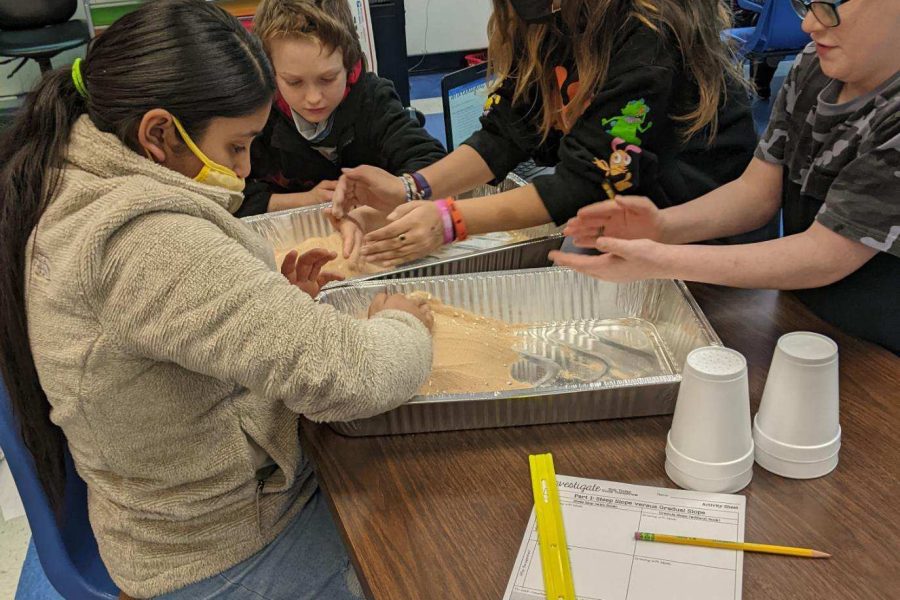
    One of the most exciting parts of working with competency-based learning models is watching young people put their learning into action and impact their world. The 5th graders at Ferrum Elementary School did just this — they used their new learning about earth structures, weathering, and erosion to help their school maintenance team combat the effects of erosion around their school building.


    Fifth grade teacher, Jennifer Saleeba, collaborated with school district leadership and instructional technologists to design an inquiry-based, personalized unit on earth structures.

    Taking inspiration from Building 21’s studio model and resources on climate change, Ms. Saleeba built a playlist that challenged her students to make meaning out of their new earth science content; investigate how this new information tells them more about their community; and create a plan to help address a challenge related to what they learned. This way of learning allowed the students to make connections to a real-world problem in their community. Through the investigation of earth science content and community context, the students were able to apply their learning to their world to solve a problem.


    From the beginning, the students knew their end goal — to take what they learned and develop a plan to reduce weathering or erosion at home in Franklin County.

    Working through a blended learning model, students engaged in the self-paced Earth Structures Playlist, small group work, individual conferences or the “Saleeba Station”, and full class discussions. The unit opened with a brainstorm of questions that the students were naturally curious about that they would revisit and add to throughout their investigation. From there, students worked through the three modules of the playlist. They explored earth structures and plate tectonics; types of rocks and the rock cycle; and finally weathering and erosion.

    During each module, the students revisited the driving and impact questions for the unit. And the activities embedded in the playlist challenged the students to make meaning, investigate, and create at each step, building upon their learning as they progressed through the modules. When the students completed work, they also completed a self-reflection on a student friendly proficiency scale, which mirrors the competencies that will be used to assess their final work.

    As a part of the Innovation Grant to move the school towards a model of personalized competency-based education (PCBE), teachers developed science proficiency scales aligned with the Virginia Science Standards of Learning. Once her students self-reflected using these scales, Ms. Saleeba knew they were ready to share their work, get feedback during “Saleeba Station”, and move on to revise and deepen their understanding.


    Structuring learning this way was new for Ms. Saleeba, her 5th graders, and FCPS.

    Karen Weaver, Instructional Technologist, reflects that “this approach allows teachers to really focus on how to differentiate learning and meet students where they are. Using blended learning practices such as station rotation and having the playlist and unit plan outline for students at the beginning of the unit frees up the teacher to ‌do small group work, conference with students, and give feedback along the way.”

    Brady W, a fifth grader who experienced this type of learning for the first time, remarks that “using the playlist with PCBE has impacted me as a learner because PCBE lets you learn at your own pace and you are able to control your own learning.”


    When it came time to make an impact, students answered the following challenge:

    As an environmental engineer, you have been asked to help Franklin County develop a plan to lessen weathering and/or erosion throughout the county. Pick a local area that is experiencing high levels of weathering or erosion and study the rocks in this environment to learn more about the natural history. What kinds of rocks did you find? Did you find more of one type than another? What do you think is causing the weathering and/or erosion? Create a model and develop a plan to lessen the amount of weathering or erosion for that particular area.

    At the end of the unit, students presented their plans to their classmates and shared solutions with Mrs. Talley, Ferrum’s school principal. At the Principal Talley’s request, the students then met with FCPS’s Maintenance Supervisor to discuss the erosion they found and investigated around their building. The students shed some light on the problem and offered to brainstorm suggestions for improvement with the maintenance team. Going forward, they will be a part of the process to remedy erosion at their school.

    When asked about the students’ experience working through the Earth Structures Playlist unit, Ms. Weaver notices that “you can see where the students feel like their learning has an impact and they can see where they’re making an impact on their community and I think that’s been different from a traditional classroom… They’re more aware of where they are in their learning and they also recognize this experience as more personalized.”

    Ms. Saleeba reflects: “Using the playlists along with PCBE has transformed my science instruction from a traditional sense in many ways. It has given me greater confidence in truly understanding what my students know, where their misconceptions are, and has afforded me the unique opportunity to truly give each and every student what they need to learn. Prior to utilizing the playlist along with PCBE, my class was quasi-student centered. I still had more than the majority of the control in the learning activities. What I didn’t have was full commitment and engagement from my students because learning wasn’t personalized for them both academically and personally. Now that I have transformed my science instruction, my students are one hundred percent engaged and committed to their learning as well as taking ownership of their learning. They know where they are, where they are going, and what they have to do to get there. They also have complete voice and choice in how they get there. I have the confidence of knowing my students are not only getting what they need, but learning that will last them a lifetime.”


    Hearing this story of impact and knowing that the Building 21 studio model can help teachers think differently about learning in their classrooms is exciting.

    And, while Ms. Saleeba was an early adopter of PCBE; all teachers at Ferrum Elementary and Henry Elementary in FCPS will plan on using the PCBE model and tools for an upcoming unit. We thank the FCPS team for sharing their story and we look forward to seeing how their instructional design continues to grow and inspire students to impact their community.

    [/vc_column_text][/vc_column][/vc_row][vc_row type=”in_container” full_screen_row_position=”middle” column_margin=”default” column_direction=”default” column_direction_tablet=”default” column_direction_phone=”default” scene_position=”center” text_color=”dark” text_align=”left” row_border_radius=”none” row_border_radius_applies=”bg” overflow=”visible” overlay_strength=”0.3″ gradient_direction=”left_to_right” shape_divider_position=”bottom” bg_image_animation=”none”][vc_column column_padding=”no-extra-padding” column_padding_tablet=”inherit” column_padding_phone=”inherit” column_padding_position=”all” column_element_spacing=”default” background_color_opacity=”1″ background_hover_color_opacity=”1″ column_shadow=”none” column_border_radius=”none” column_link_target=”_self” column_position=”default” gradient_direction=”left_to_right” overlay_strength=”0.3″ width=”1/12″ tablet_width_inherit=”default” tablet_text_alignment=”default” phone_text_alignment=”default” animation_type=”default” bg_image_animation=”none” border_type=”simple” column_border_width=”none” column_border_style=”solid”][/vc_column][vc_column column_padding=”no-extra-padding” column_padding_tablet=”inherit” column_padding_phone=”inherit” column_padding_position=”all” column_element_spacing=”default” background_color_opacity=”1″ background_hover_color_opacity=”1″ column_shadow=”none” column_border_radius=”none” column_link_target=”_self” column_position=”default” advanced_gradient_angle=”0″ gradient_direction=”left_to_right” overlay_strength=”0.3″ width=”5/6″ tablet_width_inherit=”default” tablet_text_alignment=”default” phone_text_alignment=”default” animation_type=”default” bg_image_animation=”none” border_type=”simple” column_border_width=”5px” column_border_color=”#00a3c1″ column_border_style=”solid” enable_border_animation=”true” gradient_type=”default”][vc_column_text css=”.vc_custom_1648738462146{padding-top: 15px !important;padding-right: 15px !important;padding-bottom: 15px !important;padding-left: 15px !important;}”]

    To learn more about this personalized learning unit and FCPS, please contact Karen Weaver (karen.weaver@frco.k12.va.us) and Jennifer Saleeba (jennifer.saleeba@frco.k12.va.us).

    Check out some of Building 21’s studio model resources here.

    [/vc_column_text][/vc_column][/vc_row]

  • New Voters Use Their Voice To Impact Their World

    New Voters Use Their Voice To Impact Their World

    [vc_row type=”in_container” full_screen_row_position=”middle” column_margin=”default” column_direction=”default” column_direction_tablet=”default” column_direction_phone=”default” bg_color=”#f4f4f4″ scene_position=”center” top_padding=”50″ bottom_padding=”50″ left_padding_desktop=”50″ right_padding_desktop=”50″ text_color=”dark” text_align=”left” row_border_radius=”none” row_border_radius_applies=”bg” overlay_strength=”0.3″ gradient_direction=”left_to_right” shape_divider_position=”bottom” bg_image_animation=”none” shape_type=””][vc_column column_padding=”no-extra-padding” column_padding_tablet=”inherit” column_padding_phone=”inherit” column_padding_position=”all” column_element_spacing=”default” background_color_opacity=”1″ background_hover_color_opacity=”1″ column_shadow=”none” column_border_radius=”none” column_link_target=”_self” gradient_direction=”left_to_right” overlay_strength=”0.3″ width=”1/1″ tablet_width_inherit=”default” tablet_text_alignment=”default” phone_text_alignment=”default” bg_image_animation=”none” border_type=”simple” column_border_width=”none” column_border_style=”solid”][vc_column_text]“You can register students to vote but what’s going to get them out of bed to actually vote? You can register but if you don’t know why you’re voting, there’s no meaning behind it. … Let’s give them a reason to vote… and a way to support why they’re voting the way they want to.”

    Ross Hamilton, Social Studies Teacher, Building 21 Philadelphia[/vc_column_text][vc_column_text]Ross Hamilton and Eric Hitchner pondered this question while planning their interdisciplinary approach to Senior English and Social Science at Building 21 Philadelphia for this year. Faced with remote instruction, they wanted to approach learning in a way that would motivate students to see the interconnectedness of their learning to the world around them and inspire engagement and action.[/vc_column_text][/vc_column][/vc_row][vc_row type=”in_container” full_screen_row_position=”middle” column_margin=”default” column_direction=”default” column_direction_tablet=”default” column_direction_phone=”default” scene_position=”center” text_color=”dark” text_align=”left” row_border_radius=”none” row_border_radius_applies=”bg” overlay_strength=”0.3″ gradient_direction=”left_to_right” shape_divider_position=”bottom” bg_image_animation=”none”][vc_column column_padding=”no-extra-padding” column_padding_tablet=”inherit” column_padding_phone=”inherit” column_padding_position=”all” column_element_spacing=”default” background_color_opacity=”1″ background_hover_color_opacity=”1″ column_shadow=”none” column_border_radius=”none” column_link_target=”_self” gradient_direction=”left_to_right” overlay_strength=”0.3″ width=”1/1″ tablet_width_inherit=”default” tablet_text_alignment=”default” phone_text_alignment=”default” bg_image_animation=”none” border_type=”simple” column_border_width=”none” column_border_style=”solid”][vc_row_inner column_margin=”default” column_direction=”default” column_direction_tablet=”default” column_direction_phone=”default” text_align=”left”][vc_column_inner column_padding=”no-extra-padding” column_padding_tablet=”inherit” column_padding_phone=”inherit” column_padding_position=”all” column_element_spacing=”default” background_color_opacity=”1″ background_hover_color_opacity=”1″ column_shadow=”none” column_border_radius=”none” column_link_target=”_self” gradient_direction=”left_to_right” overlay_strength=”0.3″ width=”1/2″ tablet_width_inherit=”default” bg_image_animation=”none” border_type=”simple” column_border_width=”none” column_border_style=”solid”][split_line_heading animation_type=”default”]

    At Building 21, this approach is central to studio planning.

    [/split_line_heading][vc_column_text]Teachers consider the impact their students will be able to have on their world, as they plan the culminating tasks and projects. Teachers ask themselves, How can students implement what they create and impact the world in a positive way? (Read more about Building 21’s studio design process here.)[/vc_column_text][/vc_column_inner][vc_column_inner column_padding=”no-extra-padding” column_padding_tablet=”inherit” column_padding_phone=”inherit” column_padding_position=”all” column_element_spacing=”default” background_color_opacity=”1″ background_hover_color_opacity=”1″ column_shadow=”none” column_border_radius=”none” column_link_target=”_self” gradient_direction=”left_to_right” overlay_strength=”0.3″ width=”1/2″ tablet_width_inherit=”default” bg_image_animation=”none” border_type=”simple” column_border_width=”none” column_border_style=”solid”][image_with_animation image_url=”6930″ animation=”Fade In” hover_animation=”none” alignment=”” border_radius=”none” box_shadow=”none” image_loading=”default” max_width=”100%” max_width_mobile=”default”][/vc_column_inner][/vc_row_inner][vc_column_text]This fall, leading up to the elections, Mr. Hamilton and Mr. Hitchner challenged their students, many of whom would vote for the first time in the 2020 elections, to learn more and share their positions and ideas with an authentic audience.

    Students were tasked with researching a set of diverse political positions and creating a blog and podcast to share their reactions and views. Students examined at least three political parties to understand the party’s stance on economic, social, and political issues. Students then chose the party that best matched their personal beliefs and ideas and supported their choice in their writing and media production. Their podcasts allowed the students to tackle tough issues and voice their opinions on the issues. Mr. Hamilton reflects: “In doing just this, they were then able to really understand what it means to sign on to a political party.”

    Following the elections, students once again engaged as active citizens in a Presidential letter writing challenge.

    They submitted a letter to President Biden expressing their support or criticism for one of his cabinet nominees based on their research. They also identified a single issue and advocated for the department to prioritize this issue during the administration’s first 100 days.

    Many chose to write letters in support of President Biden’s nominees in Homeland Security, Education, and HUD. They identified and prioritized issues important to them and their community, such as reopening schools, managing Covid-19 vaccinations, creating jobs, and supporting black-owned business. Students also proposed a solution to the issue and wrote about how they would connect funding and resources to improve the problem.[/vc_column_text][/vc_column][/vc_row][vc_row type=”full_width_background” full_screen_row_position=”middle” column_margin=”default” equal_height=”yes” content_placement=”middle” column_direction=”default” column_direction_tablet=”default” column_direction_phone=”default” bg_color=”#ffffff” scene_position=”center” top_padding=”50″ bottom_padding=”50″ text_color=”dark” text_align=”left” row_border_radius=”none” row_border_radius_applies=”bg” id=”steps” row_name=”Sign Up Steps” overlay_strength=”0.3″ gradient_direction=”left_to_right” shape_divider_position=”bottom” bg_image_animation=”none” shape_type=””][vc_column column_padding=”no-extra-padding” column_padding_tablet=”inherit” column_padding_phone=”inherit” column_padding_position=”all” column_element_spacing=”default” background_color_opacity=”1″ background_hover_color_opacity=”1″ column_shadow=”none” column_border_radius=”none” column_link_target=”_self” gradient_direction=”left_to_right” overlay_strength=”0.3″ width=”1/2″ tablet_width_inherit=”default” tablet_text_alignment=”default” phone_text_alignment=”default” bg_image_animation=”none” border_type=”simple” column_border_width=”none” column_border_style=”solid” offset=”vc_col-xs-12″][vc_column_text]Before submitting their letters, the students engaged in a peer review process, assessing two of their peers on the required ELA and Social Studies competencies and submitting their own letter for review.

    Mr. Hamilton reflected that this process not only improved the quality of the students’ final letters, but also helped the students develop a deeper understanding of the competencies: “You’ve got to own the competencies. So, if you’re critiquing your peer’s writing you need to know it.”[/vc_column_text][/vc_column][vc_column column_padding=”no-extra-padding” column_padding_tablet=”inherit” column_padding_phone=”inherit” column_padding_position=”all” column_element_spacing=”default” background_color_opacity=”1″ background_hover_color_opacity=”1″ column_shadow=”none” column_border_radius=”none” column_link_target=”_self” gradient_direction=”left_to_right” overlay_strength=”0.3″ width=”1/2″ tablet_width_inherit=”default” tablet_text_alignment=”default” phone_text_alignment=”default” bg_image_animation=”none” border_type=”simple” column_border_width=”none” column_border_style=”solid” offset=”vc_col-xs-12″][vc_column_text]Featured ELA, Social Studies & NextGen Essential Competencies[/vc_column_text][nectar_icon_list animate=”true” color=”default” direction=”vertical” icon_size=”small” icon_style=”border”][nectar_icon_list_item icon_type=”numerical” text_full_html=”simple” title=”List Item” id=”1638223797434-10″ tab_id=”1638223797436-3″ header=”ELA.3 Writing Arguments”][/nectar_icon_list_item][nectar_icon_list_item icon_type=”numerical” text_full_html=”simple” title=”List Item” id=”1638223797500-6″ tab_id=”1638223797503-4″ header=”SS.1 Analyzing Historical Events”][/nectar_icon_list_item][nectar_icon_list_item icon_type=”numerical” text_full_html=”simple” title=”List Item” id=”1638223797522-9″ header=”SS.2 Engaging as a Citizen” tab_id=”1638223797522-6″][/nectar_icon_list_item][nectar_icon_list_item icon_type=”numerical” text_full_html=”simple” title=”List Item” id=”1638223797533-3″ tab_id=”1638223797534-8″ header=”NGE.1 Project Quality”][/nectar_icon_list_item][nectar_icon_list_item icon_type=”numerical” text_full_html=”simple” title=”List Item” id=”1638223797552-8″ tab_id=”1638223797552-9″ header=”NGE.4 Written Communication in the Workplace”][/nectar_icon_list_item][/nectar_icon_list][/vc_column][/vc_row][vc_row type=”in_container” full_screen_row_position=”middle” column_margin=”default” column_direction=”default” column_direction_tablet=”default” column_direction_phone=”default” scene_position=”center” text_color=”dark” text_align=”left” row_border_radius=”none” row_border_radius_applies=”bg” overlay_strength=”0.3″ gradient_direction=”left_to_right” shape_divider_position=”bottom” bg_image_animation=”none”][vc_column column_padding=”no-extra-padding” column_padding_tablet=”inherit” column_padding_phone=”inherit” column_padding_position=”all” column_element_spacing=”default” background_color_opacity=”1″ background_hover_color_opacity=”1″ column_shadow=”none” column_border_radius=”none” column_link_target=”_self” gradient_direction=”left_to_right” overlay_strength=”0.3″ width=”1/1″ tablet_width_inherit=”default” tablet_text_alignment=”default” phone_text_alignment=”default” bg_image_animation=”none” border_type=”simple” column_border_width=”none” column_border_style=”solid”][vc_custom_heading text=”Here are excerpts from the students’ final products“” font_container=”tag:h4|text_align:left|color:%2300a3c1″ use_theme_fonts=”yes”][/vc_column][/vc_row][vc_row type=”full_width_background” full_screen_row_position=”middle” column_margin=”default” column_direction=”default” column_direction_tablet=”default” column_direction_phone=”default” bg_color=”#f4f4f4″ scene_position=”center” top_padding=”30″ bottom_padding=”30″ left_padding_desktop=”30″ right_padding_desktop=”30″ text_color=”dark” text_align=”left” row_border_radius=”none” row_border_radius_applies=”bg” overlay_strength=”0.3″ gradient_direction=”left_to_right” shape_divider_position=”bottom” bg_image_animation=”none” shape_type=””][vc_column column_padding=”no-extra-padding” column_padding_tablet=”inherit” column_padding_phone=”inherit” column_padding_position=”all” column_element_spacing=”default” centered_text=”true” background_color_opacity=”1″ background_hover_color_opacity=”1″ column_shadow=”none” column_border_radius=”none” column_link_target=”_self” gradient_direction=”left_to_right” overlay_strength=”0.3″ width=”1/1″ tablet_width_inherit=”default” tablet_text_alignment=”default” phone_text_alignment=”default” bg_image_animation=”none” border_type=”simple” column_border_width=”none” column_border_style=”solid”][testimonial_slider style=”minimal” star_rating_color=”accent-color” autorotate=”7000″][testimonial star_rating=”none” title=”Testimonial” id=”1638223797640-1″ quote=”Today I am writing to you, in regards to Xavier Becerra’s position as a perfect choice as the Secretary for the Department of Health and Human Services. … Becerra will not only save lives while being your President-Elect Secretary for Health and Human Services, but he will also stand by his word and do just as he said he is going to do: rescue before recovering. … Looking forward to this transformation, the main issue Xavier Becerra should be focused on is the lifespan of our American people from COVID-19 during the first 100 days of your Presidency. As of January 19, 2021, there have been approximately 6.8k new cases along with 406k deaths in America. To add on, with 96.2 million worldwide cases were found with an unfortunate amount of 2.06 million deaths worldwide. The Secretary of Health and Human Services cannot start or make changes to anything if they do not have an effective plan, which is currently, helping save the lives of the American people fighting to seek help from the virus. The Department of Health and Human Services must have that effective plan because this department plays a big role in having the willingness to protect the health of every American which includes providing very important human services, especially for those who are in desperate need of help.” tab_id=”1638223797641-3″][testimonial star_rating=”none” title=”Testimonial” id=”1638223797664-7″ quote=”Dear Mr. President, … I am a student at Building 21 High School. In this letter, I want to address your choice of Secretary of choice for the Department of Education, Miguel Cardona, which after researching him, I agree with your choice. … My research of Miguel Cardona has led me to find out about his past as a student and teacher of a public school and his work as Connecticut’s Commissioner of Education. It is to my understanding that he understands the inequality that many low income and minorities face within the education system, and I believe that having someone who has had those experiences with the education system and a person of color in such a position, allows them to further understand the issues they aim to solve. …An issue that I think the department should prioritize for the first 100 days of your presidency should be making schooling affordable for people from low-income and disadvantaged households to encourage students to pursue schooling after high school. … Because I am now in my last few months of high school and on my way to college, I have begun to see and experience the anxiety that many kids like me from low-income families feel when it comes to paying for college. And for some of us, a higher education after high school seems truly unreachable due to our financial situations that have kept us from creating generational wealth for generations.” tab_id=”1638223797665-7″][testimonial star_rating=”none” title=”Testimonial” id=”1638223797684-1″ quote=”Within the first 100 days I believe the Department of Education should focus on the issue of mental health, for students and parents. We need more money in areas of mental health because if the students are always stressed and in a bad mood, then they won’t enjoy learning. Also, students may not know how to handle themselves in most questionable situations, which will make them act out in ways that are unnecessary. Personally when I’m in a space where I can be mentally stable, I can learn a lot better. To solve this issue, money needs to be focused within the psychology field. Kids need to take a class about their mental thoughts, emotions and social life and I know Miguel will be able to bring that into our system. …Education is very important to me because students learn how to live in society, we learn how to bond and work together as a community. It’s hard to do that when students are stressed about work, tests and being judged 24/7. I’ve been there so many times and Building 21 (my high school) gave me so much inspiration. Through Building 21, I’ve become a better person, my character has been developed to how I like it.” tab_id=”1638223797685-2″][testimonial star_rating=”none” title=”Testimonial” id=”1638223797707-8″ quote=”An issue I think Marty Walsh should resolve is pretty obvious, WORK, WORK, WORK. This is very important, since covid has started, unemployment rates rose to 4.9% in 3 months, that’s 1.7 million people unemployed. Millions of people lost their ability to keep up with their bills due to them being fired or unable to find a job due to COVID. This is a serious issue that the Department of Labor should prioritize for the first 100 days of presidency. My first solution is, The Department of Labor should make an effort to get some more jobs available as well as try to open more jobs. This will limit the number of Americans who are unemployed due to Covid. … Another solution is, SUPPORT BLACK BUSINESS, my solution will solve the problems because since Covid first hit and before that billions of blacks have started black owned businesses that are very smart and eco friendly, but due to it being a black owned business, hiring employees is hard because black owned businesses lacks the attention and funding it deserves. …Providing proper funding and proper attention to this Department will save the lives of countless Americans. ‘In any given moment we have two options: to step forward into growth or step back into safety.’ -Abraham Maslow. I look forward to your response to this issue and thank you for your time and consideration.” tab_id=”1638223797707-0″][testimonial star_rating=”none” title=”Testimonial” id=”1638223797733-1″ tab_id=”1638223797734-2″ quote=”President Biden, one important issue that we should focus on today is immigration. This is an issue the Department of Homeland Security should focus on within the 100 days of your presidency. Since secretary Alejandro Mayorkas has been through the experience of being an immigrant I know he will understand the struggles that some families have when coming to the United States. It’s sad to see many families being separated from each other during hard times just because they didn’t get the help they needed and this issue is something that has been going on for many years. To solve this issue the Department of Homeland Security should push to make a program like DACA (Deferred Actions for CHILD arrivals) for adults that have a clean background or trying to better themselves. Making a program like this will help adults that are coming here have an opportunity to stay in the U.S and have the American life. One way to do this is to make sure all immigrants who are coming into the U.S records are clean with good intentions. Also, having people who are here as immigrants come forward and say who they are to make sure they can get the help and benefits from a program like DACA. The program should require adults who are 21 and older, within the program, there should be requirements such as having a stable job, making sure they are up to dates with things such as taxes or bills. President Biden, this will be the best way to solve this issue to make families feel much better and keep them safe.”][testimonial star_rating=”none” title=”Testimonial” id=”1638223797753-7″ tab_id=”1638223797754-1″ quote=”I hope this finds you in super great health and spirits! I would like to send you a warm welcome and congratulations on making your mark as the 46th President of the United States! I hope that this presidency goes super successful for you and that history will continue to be made in a positive way. With that being said, I was reaching out in regards to your remarkable nomination of selecting the first ever black secretary for the Department of Defense in U.S. history, Former General, Lloyd J. Austin III. After vigilant analysis, I would like to touch on how I am in excessive commendation for you selecting this well knowledgeable, dedicated, and determined Former General to take on this position. I truly believe that Lloyd is definitely a great pick for this department because he has an extensive amount of education and experience within this field considering that he is a graduate of the infantry Officer Basic and Advanced courses, the U.S. Army Command & General Staff College, and the U.S. Army War College. Equally significant, he succored in the U.S. Military for 4 decades, striving through his career of becoming a West Point graduate to a booming leader of the U.S. Central command! This is undeniably a great insight of black excellence and I hope to see a continuous change of more African Americans taking the positions of being the secretary of departments in the cabinet because it gives me hope that a better future is ahead! … President Biden, as this country is currently facing the COVID-19 outbreak, I believe Lloyd Austin will have a great impact with supporting the Department of Defense as he chips in to tackle the issue of developing a clever COVID-19 Vaccine Distribution Plan. This is an issue that the Department of Defense should take on within the first 100 days of your presidency so there could be an ideal development of the way vaccines are given out, who will receive it, and where the people in this department can most efficiently administer this vaccine. Considering that this deadly virus is spreading rapidly, Secretary Lloyd Austin should use his determination and wisdom to closely look into this matter and establish methods to get this issue solved immediately! The death toll for COVID-19 is increasing swiftly so this should unquestionably be the main spotlight of issues to be solved.”][/testimonial_slider][/vc_column][/vc_row][vc_row type=”in_container” full_screen_row_position=”middle” column_margin=”default” column_direction=”default” column_direction_tablet=”default” column_direction_phone=”default” scene_position=”center” text_color=”dark” text_align=”left” row_border_radius=”none” row_border_radius_applies=”bg” overlay_strength=”0.3″ gradient_direction=”left_to_right” shape_divider_position=”bottom” bg_image_animation=”none”][vc_column column_padding=”no-extra-padding” column_padding_tablet=”inherit” column_padding_phone=”inherit” column_padding_position=”all” column_element_spacing=”default” background_color_opacity=”1″ background_hover_color_opacity=”1″ column_shadow=”none” column_border_radius=”none” column_link_target=”_self” gradient_direction=”left_to_right” overlay_strength=”0.3″ width=”1/1″ tablet_width_inherit=”default” tablet_text_alignment=”default” phone_text_alignment=”default” bg_image_animation=”none” border_type=”simple” column_border_width=”none” column_border_style=”solid”][divider line_type=”No Line” custom_height=”50″][/vc_column][/vc_row][vc_row type=”in_container” full_screen_row_position=”middle” column_margin=”default” column_direction=”default” column_direction_tablet=”default” column_direction_phone=”default” scene_position=”center” text_color=”dark” text_align=”left” row_border_radius=”none” row_border_radius_applies=”bg” overlay_strength=”0.3″ gradient_direction=”left_to_right” shape_divider_position=”bottom” bg_image_animation=”none”][vc_column column_padding=”no-extra-padding” column_padding_tablet=”inherit” column_padding_phone=”inherit” column_padding_position=”all” column_element_spacing=”default” background_color_opacity=”1″ background_hover_color_opacity=”1″ column_shadow=”none” column_border_radius=”none” column_link_target=”_self” gradient_direction=”left_to_right” overlay_strength=”0.3″ width=”1/1″ tablet_width_inherit=”default” tablet_text_alignment=”default” phone_text_alignment=”default” bg_image_animation=”none” border_type=”simple” column_border_width=”none” column_border_style=”solid”][vc_column_text]These and many other letters were submitted to President Biden via whitehouse.gov – students took a screenshot of their confirmation message to share with Mr. Hamilton and Mr. Hitchner. Among the senior class, there is hope that President Biden will respond. (We’ll keep you posted!)

    Most importantly, this approach to ELA and Social Studies led to students engaging in their learning in a meaningful way. Inspired by their teachers’ call to action, they produced a series of real-world, student-driven products that impacted their world. Mr. Hamilton told his students: “This is your opportunity to decide what speaks to you and then roll with it. You know everything you need to do. Find out what you’re passionate about and investigate it.” And they did. They created blogs, recorded podcasts, and wrote letters to meet the moment, learning why it’s important to be an active citizen and advocating for issues central to their lives.[/vc_column_text][/vc_column][/vc_row]

  • Studio Impact: Civic Participation & the Right to Vote

    Studio Impact: Civic Participation & the Right to Vote

    [vc_row type=”full_width_background” full_screen_row_position=”middle” column_margin=”default” column_direction=”default” column_direction_tablet=”default” column_direction_phone=”default” bg_color=”#ffffff” scene_position=”center” top_padding=”7%” bottom_padding=”7%” text_color=”dark” text_align=”left” row_border_radius=”none” row_border_radius_applies=”bg” overflow=”visible” overlay_strength=”0.3″ gradient_direction=”left_to_right” shape_divider_position=”bottom” bg_image_animation=”none”][vc_column column_padding=”no-extra-padding” column_padding_tablet=”inherit” column_padding_phone=”inherit” column_padding_position=”all” column_element_spacing=”default” centered_text=”true” background_color_opacity=”1″ background_hover_color_opacity=”1″ column_shadow=”none” column_border_radius=”none” column_link_target=”_self” column_position=”default” gradient_direction=”left_to_right” overlay_strength=”0.3″ width=”1/1″ tablet_width_inherit=”default” tablet_text_alignment=”default” phone_text_alignment=”default” animation_type=”default” bg_image_animation=”none” border_type=”simple” column_border_width=”none” column_border_style=”solid”][testimonial_slider style=”minimal” star_rating_color=”accent-color” disable_height_animation=”true”][testimonial star_rating=”none” title=”Testimonial” id=”1655901924640-4″ name=”Destanie Sanchez,” subtitle=”Allentown Class of 2020″ quote=”This is how we can change the world by voting for who we want to be president and not only for president for other things as well. Our voice is strong enough that if we want it to be heard, we can be heard. `{`Shannon Salter`}` gave us confidence. She wanted us to learn and it was true and pure from her heart.” tab_id=”1655901924640-4″][/testimonial_slider][/vc_column][/vc_row][vc_row type=”in_container” full_screen_row_position=”middle” column_margin=”default” column_direction=”default” column_direction_tablet=”default” column_direction_phone=”default” scene_position=”center” text_color=”dark” text_align=”left” row_border_radius=”none” row_border_radius_applies=”bg” overflow=”visible” overlay_strength=”0.3″ gradient_direction=”left_to_right” shape_divider_position=”bottom” bg_image_animation=”none”][vc_column column_padding=”no-extra-padding” column_padding_tablet=”inherit” column_padding_phone=”inherit” column_padding_position=”all” column_element_spacing=”default” background_color_opacity=”1″ background_hover_color_opacity=”1″ column_shadow=”none” column_border_radius=”none” column_link_target=”_self” column_position=”default” gradient_direction=”left_to_right” overlay_strength=”0.3″ width=”1/1″ tablet_width_inherit=”default” tablet_text_alignment=”default” phone_text_alignment=”default” animation_type=”default” bg_image_animation=”none” border_type=”simple” column_border_width=”none” column_border_style=”solid”][vc_column_text]Shannon Salter, founding humanities educator at Building 21 Allentown, is deeply committed to designing authentic studio experiences that allow her students to feel empowered to take action in their communities. Each year, she focuses her fall senior Civics studios on voter participation and the history of voters’ rights. This timely studio energizes seniors to educate and mobilize their community, earning them recognition from the Governor’s Office and When We All Vote.

    Here’s a closer look at Shannon’s studio design and impact.

    The first civics studio of the year is all about civic participation through the right to vote. Students investigate who has the right to vote and who does not, how inclusion in the idea of “We the People” has changed over time, what strategies have been used to expand the right to vote, and what obstacles still exist as barriers to voter participation. At the conclusion of this studio, students will advocate for new strategies or changes in policy to address low voter turnout, through the writing of an argument essay and through the creation of a social media campaign designed to get out the vote in their own community. Students also tackle the individual decision of whether they will become voters, and are supported in completing their voter registrations. Our fall voter registration drive is underway – I registered a student just yesterday![/vc_column_text][/vc_column][/vc_row][vc_row type=”in_container” full_screen_row_position=”middle” column_margin=”default” column_direction=”default” column_direction_tablet=”default” column_direction_phone=”default” scene_position=”center” text_color=”dark” text_align=”left” row_border_radius=”none” row_border_radius_applies=”bg” overflow=”visible” overlay_strength=”0.3″ gradient_direction=”left_to_right” shape_divider_position=”bottom” bg_image_animation=”none”][vc_column column_padding=”no-extra-padding” column_padding_tablet=”inherit” column_padding_phone=”inherit” column_padding_position=”all” column_element_spacing=”default” background_color_opacity=”1″ background_hover_color_opacity=”1″ column_shadow=”none” column_border_radius=”none” column_link_target=”_self” column_position=”default” gradient_direction=”left_to_right” overlay_strength=”0.3″ width=”1/1″ tablet_width_inherit=”default” tablet_text_alignment=”default” phone_text_alignment=”default” animation_type=”default” bg_image_animation=”none” border_type=”simple” column_border_width=”none” column_border_style=”solid”][vc_column_text]

    What is the most important thing you want your students to learn/understand?

    The goal of all four years of social studies education at Building 21 is to prepare students for engagement in civic life. I design instruction that gives students authentic experiences in taking their learning – whether it is learning about history, or science, or literature – and translate it into empowered action in their communities. Their capstone civics experience is about ensuring that students leave school with a toolbox full of the tools they will need to be successful citizens – what are the many ways they can raise their voice and have an impact on the neighborhood, city, state, nation, and world that they live in? By examining strategies used by individuals in the past – voting, judicial action, legislation, protest, and even revolution – students will hopefully enter the adult world understanding their power as a part of “We the People.”[/vc_column_text][/vc_column][/vc_row][vc_row type=”in_container” full_screen_row_position=”middle” column_margin=”default” column_direction=”default” column_direction_tablet=”default” column_direction_phone=”default” scene_position=”center” text_color=”dark” text_align=”left” row_border_radius=”none” row_border_radius_applies=”bg” overflow=”visible” overlay_strength=”0.3″ gradient_direction=”left_to_right” shape_divider_position=”bottom” bg_image_animation=”none”][vc_column column_padding=”no-extra-padding” column_padding_tablet=”inherit” column_padding_phone=”inherit” column_padding_position=”all” column_element_spacing=”default” background_color_opacity=”1″ background_hover_color_opacity=”1″ column_shadow=”none” column_border_radius=”none” column_link_target=”_self” column_position=”default” gradient_direction=”left_to_right” overlay_strength=”0.3″ width=”1/1″ tablet_width_inherit=”default” tablet_text_alignment=”default” phone_text_alignment=”default” animation_type=”default” bg_image_animation=”none” border_type=”simple” column_border_width=”none” column_border_style=”solid”][vc_column_text]

    What impact do you see?

    There is a great sense of confidence that comes from being able to be part of events, rather than having events happen to you. Even when students are too young to begin participating in adult citizenship through voting, I see a calm that comes when students have the tools to observe events in the world with understanding and knowledge of their ability to act or to provoke others to act on their behalf. The 2016 Presidential Election was a good example of this. Students in our largely immigrant community were right to be full of questions about what that election meant for them and their families. But rather than despair and rage, students came back to school the day after the election ready to start conversations and get to work, because they’d been taught that they are equal partners in the social contract between themselves and the government, and that there are tools that can be used to get their ideas, their concerns, and their needs elevated to those who govern.

    This type of confidence is infectious. Every year we see students not only registering themselves to vote, but asking for additional voter registration forms because they have given their family members and friends the motivation to become voters by sharing their learning. Some students take it even further. Last year, I had the privilege of escorting one motivated student to a city council campaign event, where she – at the age of 16 – stood up and demanded that the panel of candidates commit to policies to further protect the immigrant students of Allentown and their families. Her voice moved those candidates to address her issue, on the record, and this cemented her needs and those of her classmates as a municipal election issue. I escorted another student to a protest demonstration pushing for schools to be made safer from gun violence. Through requests like this, students show that they are developing confidence; they believe that their voices matter and that they will be listened to outside of their classrooms.[/vc_column_text][/vc_column][/vc_row][vc_row type=”full_width_background” full_screen_row_position=”middle” column_margin=”default” column_direction=”default” column_direction_tablet=”default” column_direction_phone=”default” scene_position=”center” text_color=”dark” text_align=”left” row_border_radius=”none” row_border_radius_applies=”bg” overflow=”visible” id=”testimonials” overlay_strength=”0.3″ gradient_direction=”left_to_right” shape_divider_position=”bottom” bg_image_animation=”none” shape_type=””][vc_column column_padding=”no-extra-padding” column_padding_tablet=”inherit” column_padding_phone=”inherit” column_padding_position=”all” column_element_spacing=”default” background_color_opacity=”1″ background_hover_color_opacity=”1″ column_shadow=”none” column_border_radius=”none” column_link_target=”_self” column_position=”default” gradient_direction=”left_to_right” overlay_strength=”0.3″ width=”1/1″ tablet_width_inherit=”default” tablet_text_alignment=”default” phone_text_alignment=”default” animation_type=”default” bg_image_animation=”none” border_type=”simple” column_border_width=”none” column_border_style=”solid”][vc_row_inner column_margin=”90px” column_direction=”default” column_direction_tablet=”default” column_direction_phone=”default” text_align=”left” row_position=”default” row_position_tablet=”inherit” row_position_phone=”inherit” overflow=”visible” pointer_events=”all”][vc_column_inner column_padding=”padding-2-percent” column_padding_tablet=”no-extra-padding” column_padding_phone=”no-extra-padding” column_padding_position=”right” bottom_margin_tablet=”5%” bottom_margin_phone=”5%” column_element_spacing=”default” background_color_opacity=”1″ background_hover_color_opacity=”1″ column_shadow=”none” column_border_radius=”none” column_link_target=”_self” gradient_direction=”left_to_right” overlay_strength=”0.3″ width=”1/1″ tablet_width_inherit=”default” animation_type=”default” enable_animation=”true” animation=”fade-in-from-bottom” bg_image_animation=”none” border_type=”simple” column_border_width=”none” column_border_style=”solid”][nectar_single_testimonial testimonial_style=”basic_left_image” image=”7085″ add_image_shadow=”true” href=”//www.allinforvoting.com/“” target=”“_blank“” name=”Shannon Salter” subtitle=”ELA, Social Studies & Civics Teacher, Building 21 Allentown”][vc_column_text css=”.vc_custom_1637770183415{padding-left: 90px !important;}”]Contact Shannon for more information on her work.

    Shannon (BA in Political Science; M.Ed. in Secondary Education) is certified in Secondary Social Studies, ELA, and Communications. Having taught for nine years, this is her sixth year at Building 21 Allentown. She is a founding humanities teacher and is a studio designer with the Building 21 Network. Shannon currently teaches Civics, Yearbook, a Criminal Justice elective, and AP US Government.

    Shannon is a member of the iCivics EdNet, the ESRI T3G (Teachers Teaching Teachers GIS) Network, the Pennsylvania Council for Social Studies, and the National Council for Social Studies. She is a founding member of the Lehigh Valley Civic Educator Partnership and was recently invited to join the All In for Voting Teacher Ambassador Network.[/vc_column_text][/vc_column_inner][/vc_row_inner][/vc_column][/vc_row]

  • Does Content Matter?

    Does Content Matter?

    There are two questions that I have thought about often and deeply over the last 5 years while trying to create an innovative school model. The first is asked by every student at least once in their educational career (and by my own middle school and high school children more often than I would like), “Why do I have to learn this or when am I ever going to use this?”

    The other has been asked by teachers, especially in secondary school, since we started challenging traditional mindsets about the purpose of school, “But what about my content? Doesn’t content matter?”

    When put together, it is easy to see why there is a disconnect between teaching and student engagement.

    Teacher: “I have all of this content knowledge that I must transfer to your brain.”

    Student: “But why? When am I ever going to use that and why does it matter?”

    The battle over content is ever-present and ongoing. Does content matter? And if so, what content actually matters?

    The short answer is, of course content matters! We developed the Building 21 Competency Framework aligned to national standards that focus on transferrable skills that can be applied across students of all ages and in all contexts for learning. Using this approach, teachers can design meaningful and engaging learning opportunities around relevant content, which becomes the context for demonstrating growth and progress on the competencies. You cannot demonstrate the skills of a competency without deeply engaging in content. For example, if you want to understand the relationship between the past and current issues today, you have to dive deeply into the content related to an issue or event, analyzing primary source documents and multiple perspectives as part of your investigation.

    But not all content matters to all students; the days of following a one-size fits all textbook are gone. So the question remains, what content do students need to learn in school and why?

    There is no simple answer to that question. Yes, it is nice to know things, and it is fun to know the answer to lots of trivia questions, but simply knowing stuff is not helpful if we can’t use it. And we live in a world where if we need to learn something we don’t know, we can access that information in seconds. But without content, what is learning?

    So, yes, content matters, but not as much as you probably think and not for the sake of the knowledge itself. Content matters when it is relevant to our lives or something we are passionate about. Content matters when it helps us to make connections, see patterns, identify themes, and understand issues from multiple perspectives. Content matters when we are trying to solve problems and discover new solutions. Content matters when we are trying to keep from repeating the same mistakes and when we need our past to help us understand the present. Content matters when we seek to be a force for social good and need historical and societal context to do so. And content matters when we are seeking the truth, a concept that seems elusive in our society today.

    That being said, offering students access to rigorous content is a must, and this lack of access is contributing to the widening achievement gap. Part of personalization is offering different paths to specialize in content acquisition and not just one track to get there. Students who are passionate about a subject area should have multiple paths to access specific content and higher-level opportunities so that they are properly prepared with the prerequisite experiences necessary for the postsecondary opportunity of their choosing.

    Maybe the question to ask isn’t what content matters, but how do I make content matter? As you are designing your learning experiences, don’t wait for your students to ask you, why does this matter? Ask yourself, why am I teaching this? How is this relevant to my students? How can I help them make connections and want to engage deeply with this content? How will they be able to apply their learning to the world we live in today? It is through the relationships that we build with our students that we help them learn what matters by teaching what matters. And perhaps the most important thing to remember is that we are not teachers of content, but teachers of students.

    Resources for Further Reading:

© 2026 Copyright Building 21 | All rights reserved.